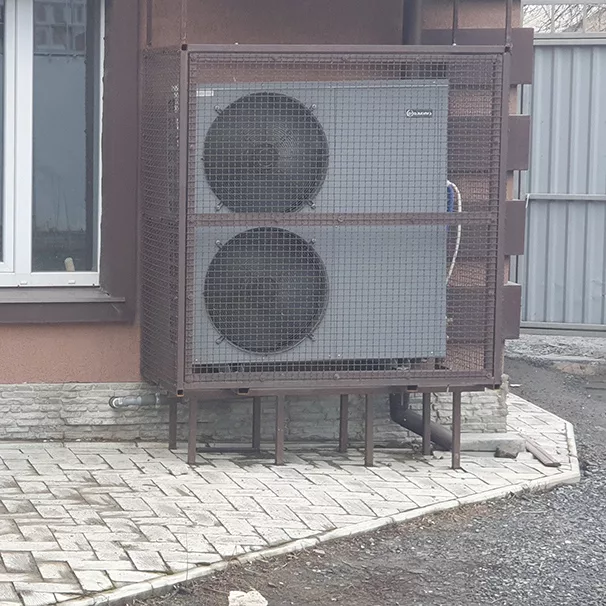
Global trends in rising prices for traditional energy resources and increasing requirements for environmental protection have caused the active development of technologies for the use of alternative and renewable energy sources. Heat pumps are precisely those systems in which such technologies are implemented and the principle of their operation is based on the transfer of heat from a renewable source (air, water, geothermal heat) into the room when operating for heating and, conversely, from the room to an external source when operating for cooling.
Today, heat pumps are the most economical heating devices. Compared to traditional electric heaters, heat pumps can save up to 80% of energy. Depending on the energy source used and the heating medium, heat pumps are divided into three types: air-to-air, air-to-water and water-to-water (geothermal).
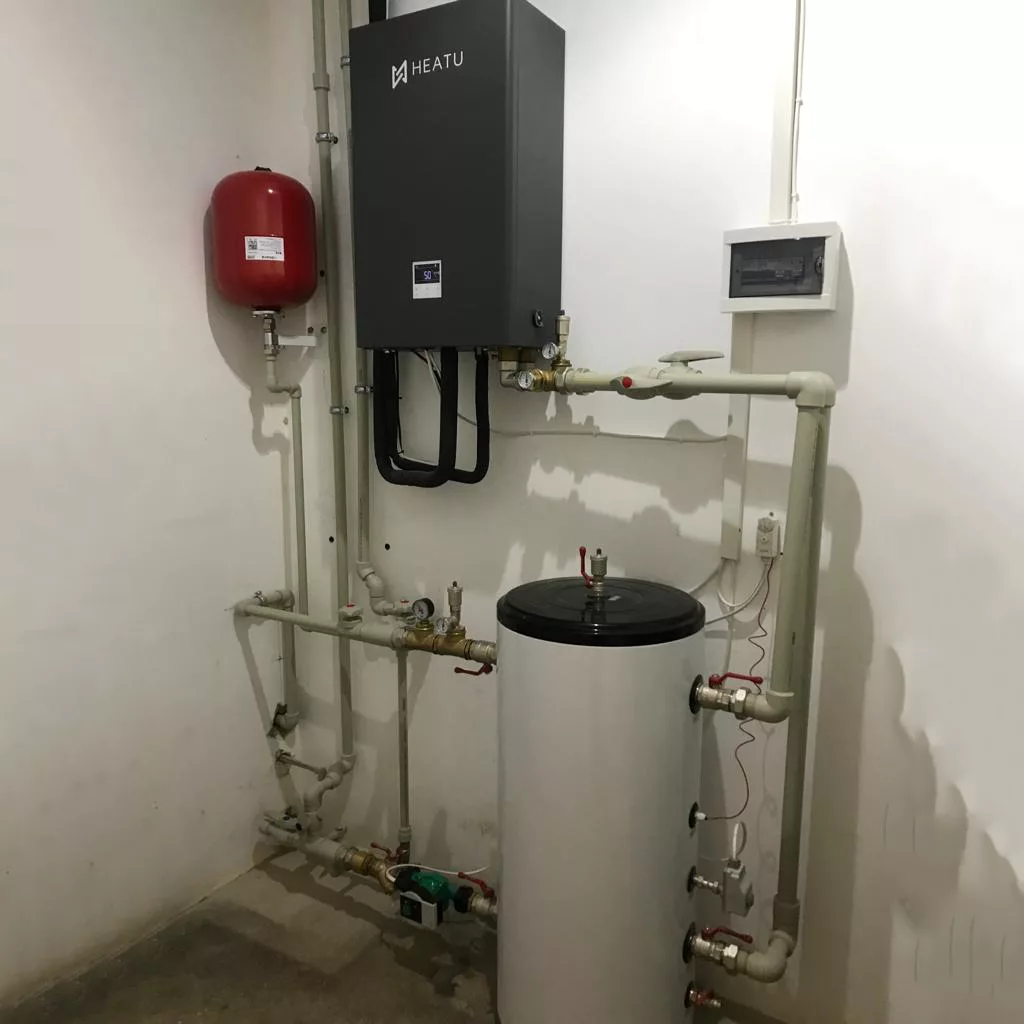
Heat pumps are also an excellent solution when upgrading an old heating system and replacing old boilers with ecological heating. It is enough to mount the external heat pump unit and connect it to the existing heating system. There is no need to carry out major repairs or rework the entire heating system. Modern models, having excellent efficiency, allow heating the coolant to 70 °C and, thanks to this, can be used without restrictions for heating and preparing hot water, significantly reducing costs.
What can be concluded? Heat pumps are a versatile way to build a highly efficient heating and air conditioning system in your home. Cost-effectiveness and long service life are the main advantages of heat pumps. The most important thing is to choose the right type and model of heat pump for your tasks and your budget.
Heatu Services specialists helped us select and install an air conditioning system. The entire process went flawlessly and the post-installation support was top notch. Great job!
Zdeněk
Reliable solutions for the home
Thanks to Heatu Services, our home is now equipped with a reliable and efficient photovoltaic system. They offered the best value for money and their professionalism and attention to detail was impressive.
Marta
Professionalism and innovation
By contacting Heatu Services for the installation of a photovoltaic system, we received not only high-quality equipment, but also a professional approach to its integration into our home. The company's innovative solutions have allowed us to use solar energy as efficiently as possible.
Petr
Highly appreciated customer service
We are impressed with the level of customer service at Heatu Services. From the first consultation to the completion of the installation of the water supply system, the team proved to be exceptional specialists, ready to meet the client's needs.
Martin
Convenience and ease of use
The system installed by "Heatu Services" impressed with its simplicity and ease of use. Now the climate control in our home is literally done at the touch of a button.
Eva
Responsible approach to the environment
By choosing Heatu Services, we received not only an effective system, but also the confidence that we are doing our part to protect the environment. Their solutions are truly environmentally friendly.
Tomáš
Leave a request for a consultation
Leave a consultation request and our staff will contact you as soon as possible.
You can order services in various ways: call the phone number listed on the website, send a message by mail, make a request for a consultation in the website form.
In most cases, based on the existing floor plan, it is possible to draw up a preliminary estimate, and the final version only after a visit to the site by a company employee, after agreeing and clarifying all the details regarding materials and installation work.
Heat pumps
Over 20 years of monitoring in residential and industrial applications shows that for a well installed and maintained heat pump, the compressor life is 50,000 - 80,000 operating hours, which equates to 15-20 years of intensive use.
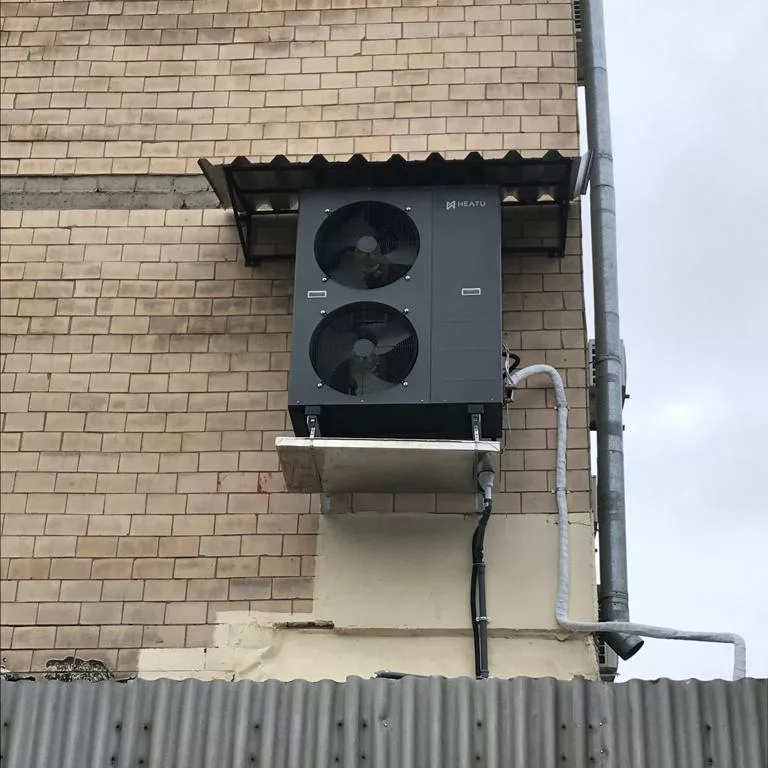
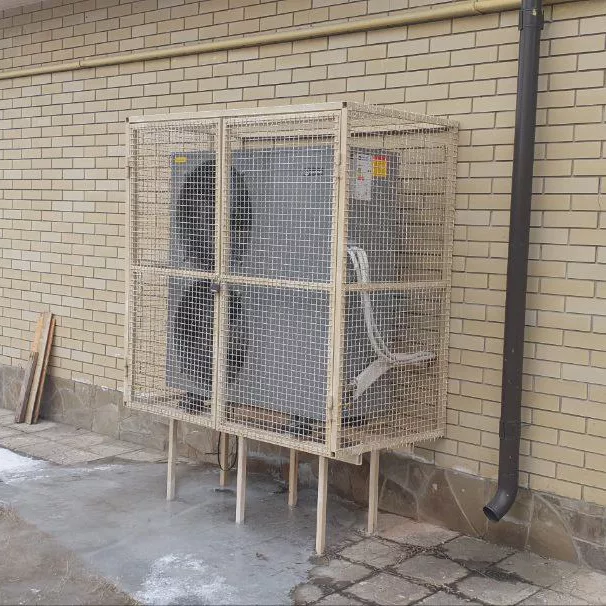
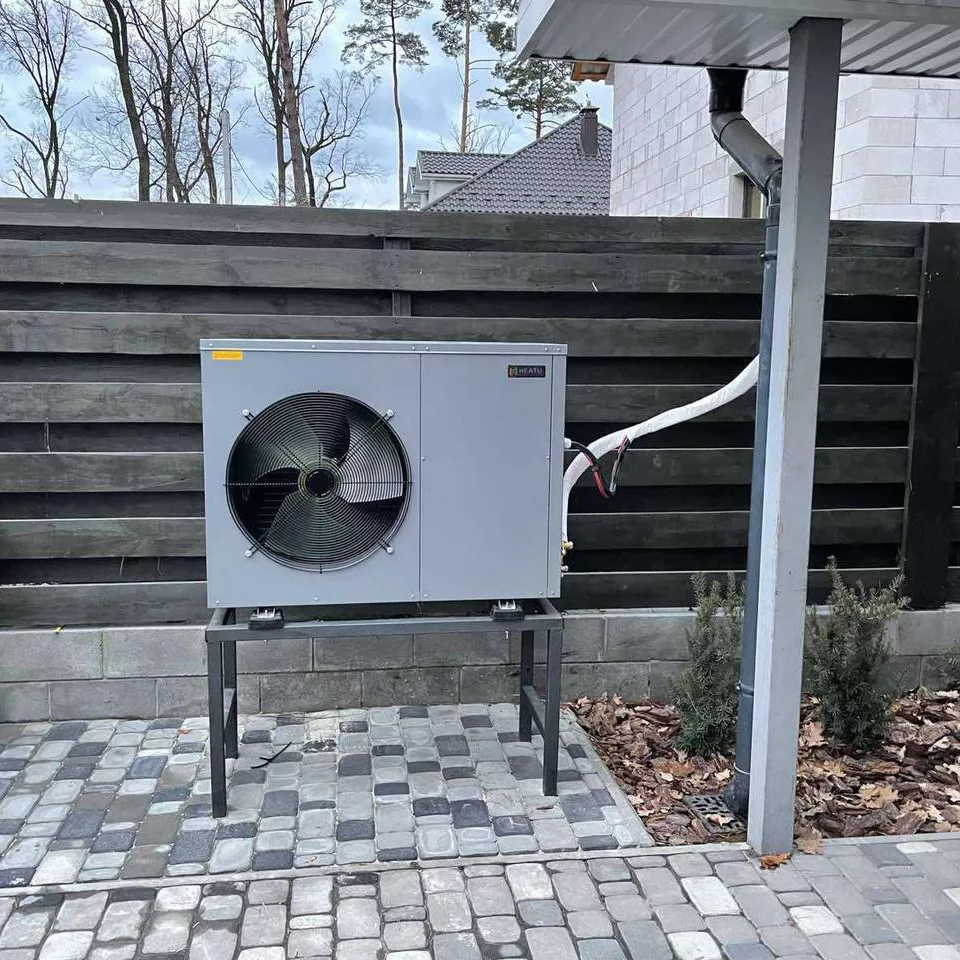
The heat pump must be installed on a level surface (eg concrete foundation, iron frame) in the open air. The surface must be able to withstand the load so that there is no noise when the heat pump operates. Do not install the heat pump on a north facing location. This may reduce its performance. It is necessary to provide for the removal of a large amount of condensate, which drains from the evaporator and freezes in winter. If you take it to the sewer, you need to heat the drain in cold weather.
Heat is absorbed from the air (ground, water) by the evaporator of the heat pump, causing the liquid refrigerant to take the form of vapor. The evaporation temperature of the refrigerant is very low, around -50°C, so it absorbs heat at low air temperatures. After steam enters the compressor, compression occurs with an increase in the heating temperature of the refrigerant. Moving into the condenser, the refrigerant gives off heat, after which the thermal energy goes to the hot water supply and heating system.
The heat pump contains two relatively noisy devices - compressor and fan. That's why level noise is an important parameter that it is forbidden neglect when choosing . Level acoustic power ( noise ) of a specific device indicated in its technical specifications. It is measured one meter from the outdoor unit and usually amounts to about 50-55 dB . For comparison ordinary conversation from a distance of one meter - 45 dB , loud conversation - 60dB. However should keep in mind that level heat pump noise directly depends on its quality.
???? Certainly! Modern thermal pumps air -water provide enough warmth even at temperatures outdoor air -25 °C. Usually compressor provides all the heat up to temperatures of approximately -7°C to -10°C, and at higher temperatures low temperatures _ helps built-in electric boiler. With ground -water heat pumps it is easier because the antifreeze heated in the ground is always warmer than 0°C.
Very approximately, in simple terms calculations for heating 10 m² require 1 kW thermal power. For example, to heat a house with an area of 160 m² you will need heat pump heat power 16 kW. At the same time, its consumed power will be 3-4 times less. For a more precise definition needed consultation specialist
In 90% of cases The heat pump is connected to the existing pipes of the system heating and supplies coolant into existing radiators, warm floors, etc. Old boiler can be use How spare heat source or How auxiliary heat source. The heat pump automation itself will be able to turn on the old boiler if necessary.
Properly installed no heat pump required complex service or regulated replacing its elements. Required service systems outside the heat pump. This is filter cleaning, check pressure, terminals, etc. Such procedures must be executed at any system, including heating with a gas boiler.
Air-to-water heat pumps take advantage of the fact that in winter they defrost the evaporator in reverse and thus cool the water within a few minutes at this point. In cooling mode, they switch to continuously supply cooling water to the home. The waste heat is dissipated into the outside air.
Active cooling:
We switch the heat pump "backwards" using switch valves on the water side. And even here, heat is taken from the storage system - the heating system, and is spent in wells. This improves their regeneration and increases the efficiency of hot water production, since we achieve a higher heating coefficient of warm wells.
Passive cooling:
At the beginning of summer, the wells are cooled after winter, so we can take the cold directly, with the compressor turned off. This cooling is practically free. At the same time, for greater comfort, it is advisable to use fan coil units, because not everyone likes a cold floor, and radiators will not be able to provide a significant effect.
Heat pumps are most suitable for low temperature surface systems - floor or wall mounted with a predicted heating water temperature of 30 - 40°C. They achieve the highest heating coefficient and thus very low energy consumption.
But using a heat pump even with radiators is not a problem. They also work effectively in radiator systems with a projected temperature of 55/45°C, as HEATU heat pumps achieve outlet temperatures of up to 60°C.
This is a good solution after insulating the house, when the required outlet temperature of the coolant usually decreases to 50-55 °C.
Heat pumps are among the most environmentally friendly heating devices. By consuming one kilowatt-hour of electricity, a heat pump will transfer three, four or more kilowatt-hours of thermal energy for heating from outside the home's thermal loop - a ratio that clearly demonstrates the financial and environmental opportunities that heat pump technology offers.
Air-to-water heat pumps take heat from the outside air. To do this, the temperature of the evaporator outside must be significantly lower than the air temperature. And the air contains atmospheric moisture. It “freezes” on the evaporator of the heat pump - after all, we know this on the evaporator of the refrigerator.
Frost forms most quickly on the evaporator of a heat pump at temperatures between -2 °C and +7 °C. Above +7 °C, frost no longer forms and moisture flows off in the form of condensation, and at low temperatures, air humidity decreases significantly and frost forms on the evaporator very slowly.
The heat pump controller constantly checks for frost on the evaporator and, if necessary, starts the defrost process fully automatically. In this case, the cooling circuit of the heat pump works in the opposite direction using a switching valve; the heat pump in this mode actually does not heat, but cools. Heat is removed from the water in a storage tank or in a heated floor for a short time (usually 2-3 minutes) and supplied to the evaporator. The ice melts and flows off as condensation. After defrosting, the heat pump switches back to heating mode.
A heat pump is in many ways superior to conventional heating methods such as heating with coal, wood or gas. We will briefly summarize the main advantages:
Expenses:
By using a heat pump, you can reduce your heating energy costs by up to 50 percent. In addition, you are not subject to rising fossil fuel prices, which will continue to rise over the coming years.
The heat pump requires almost no maintenance and does not require a chimney or fuel storage space.
Environment:
Heat pumps represent clean heating. They probably have the greatest CO 2 saving potential of any energy source and operate without pollutant emissions.
Thanks to renewable electricity, heat pumps are the only true "zero emission heating" available on the market.
Compared to an electric boiler, a heat pump saves electricity three times.
Yes! Modern, powerful and highly efficient heat pumps are well suited for modernization and renovation of property heating systems. If you have an underfloor heating system, heating with a heat pump is the ideal solution. However, convection heating systems with heating elements (plates/elements) are also suitable for heat pump heating. It is advisable to insulate the house.
Information:
Heatsepl Group s.r.o. Děčínská 552/1, Střížkov 180 00 Praha 8
To provide the best experiences, we use technologies like cookies to store and/or access device information. Consenting to these technologies will allow us to process data such as browsing behavior or unique IDs on this site. Not consenting or withdrawing consent, may adversely affect certain features and functions.
Functional
Always active
The technical storage or access is strictly necessary for the legitimate purpose of enabling the use of a specific service explicitly requested by the subscriber or user, or for the sole purpose of carrying out the transmission of a communication over an electronic communications network.
Preferences
The technical storage or access is necessary for the legitimate purpose of storing preferences that are not requested by the subscriber or user.
Statistics
The technical storage or access that is used exclusively for statistical purposes.The technical storage or access that is used exclusively for anonymous statistical purposes. Without a subpoena, voluntary compliance on the part of your Internet Service Provider, or additional records from a third party, information stored or retrieved for this purpose alone cannot usually be used to identify you.
Marketing
The technical storage or access is required to create user profiles to send advertising, or to track the user on a website or across several websites for similar marketing purposes.